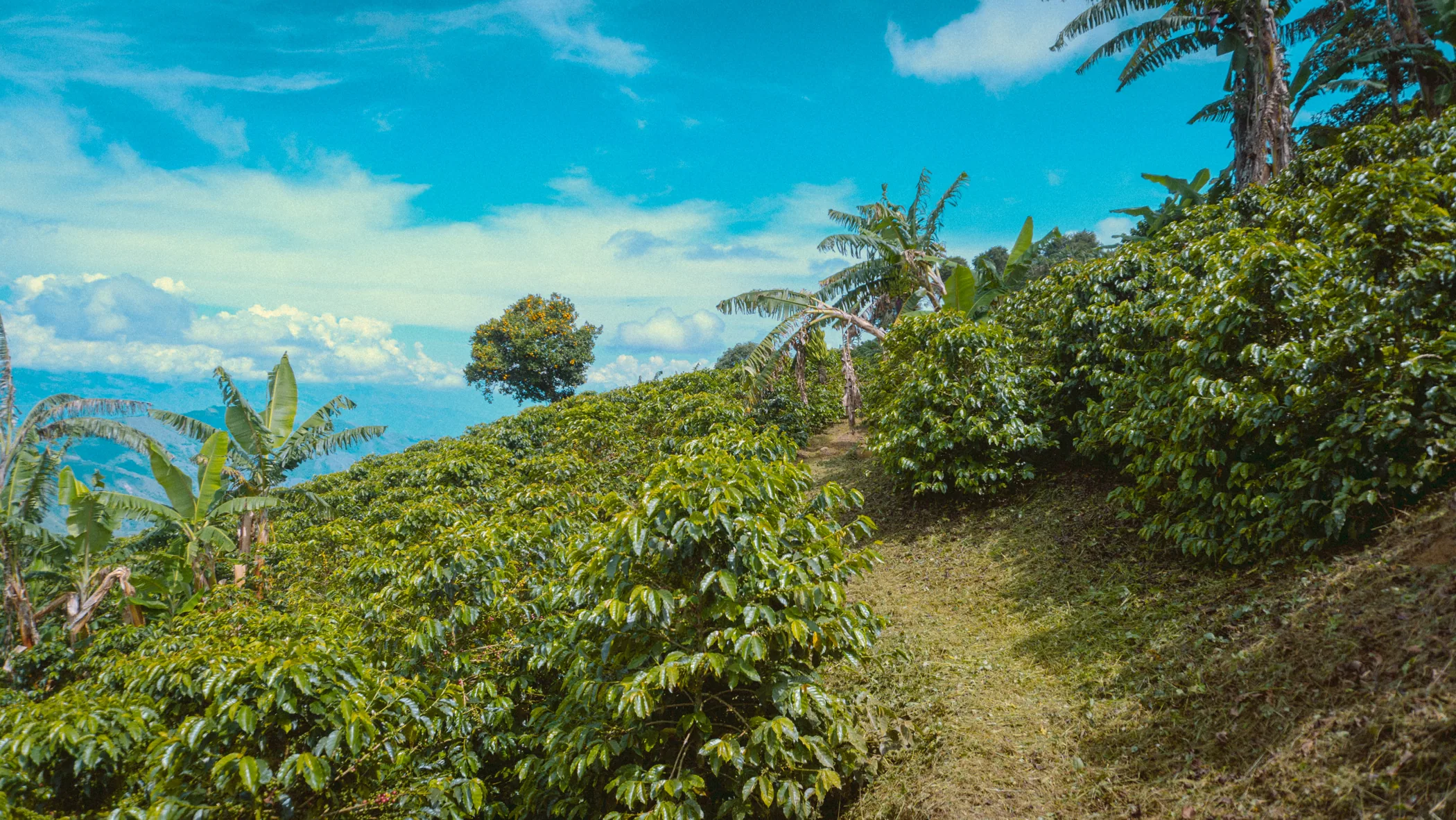
Coffee Direct Trade: Why Buy Green Coffee Directly from Producers?
For specialty coffee roasters, buying green coffee is about more than finding an excellent cup. It also means understanding where coffee comes from, how it was grown and processed, and whether the same quality can be sourced consistently over time.
Different sourcing models offer different degrees of connection to origin. Understanding those differences helps roasters choose suppliers aligned with their expectations for quality, transparency and long-term commercial relationships.
What is green coffee sourcing?
Green coffee sourcing is the process through which roasters identify, evaluate, purchase and incorporate unroasted coffee into their supply chains. Depending on the model, local buyers, exporters, importers, traders and logistics providers may work between the farm and the roastery.
Roasters typically want to know: Where was the coffee grown? Who produced it? How was it processed? Is the lot traceable? How was quality controlled? Can it be purchased again? These questions matter particularly when building a specialty coffee program based on consistency and transparency.
Understanding the different green coffee sourcing models
There is no single way to source green coffee. One key difference is the number of intermediaries involved between the producer and the roaster.
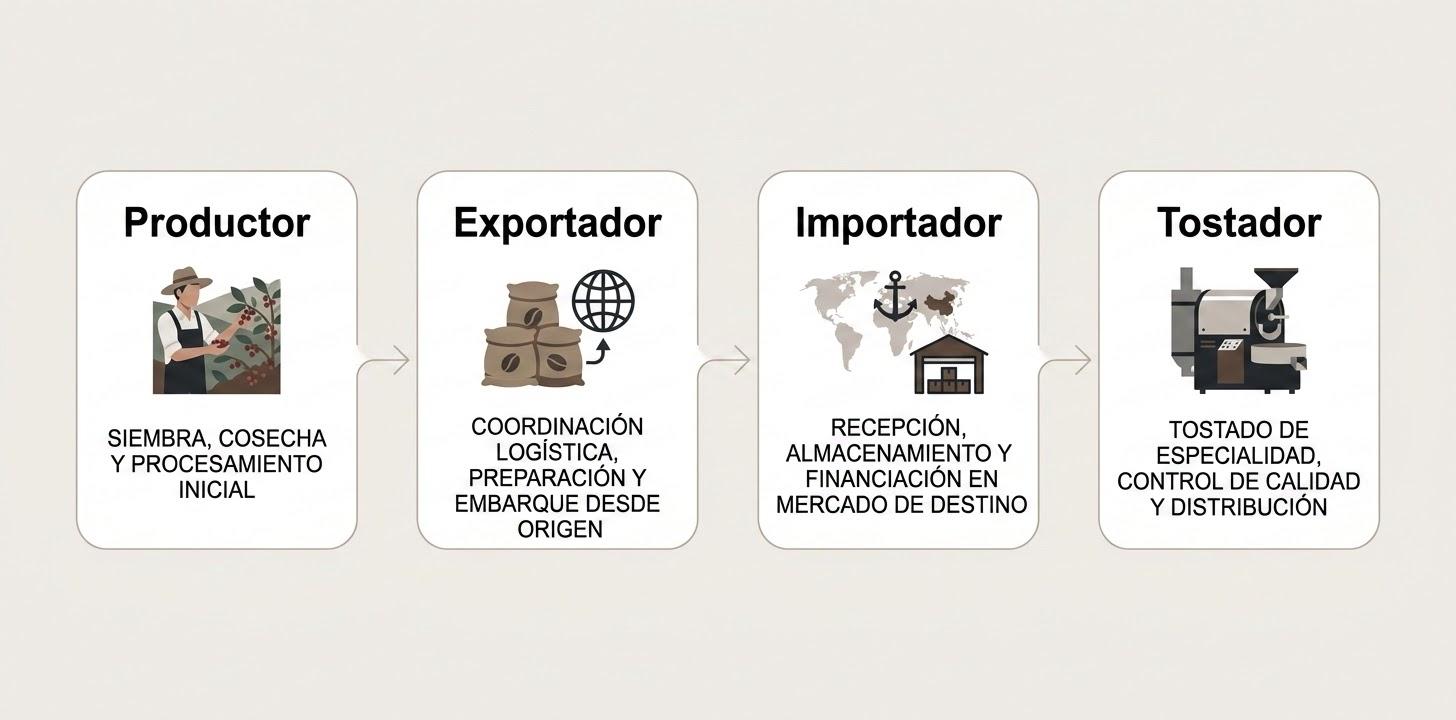
Sourcing through importers (Importer Sourcing)
An importer buys green coffee in the producing country and distributes it to roasters at destination, providing logistics, financing and warehousing services.
Supply chain: Producer → Exporter → Importer → Roaster.
Advantage: Access to various origins and simplified logistics.
Limitation: Less direct contact between the roaster and producer.
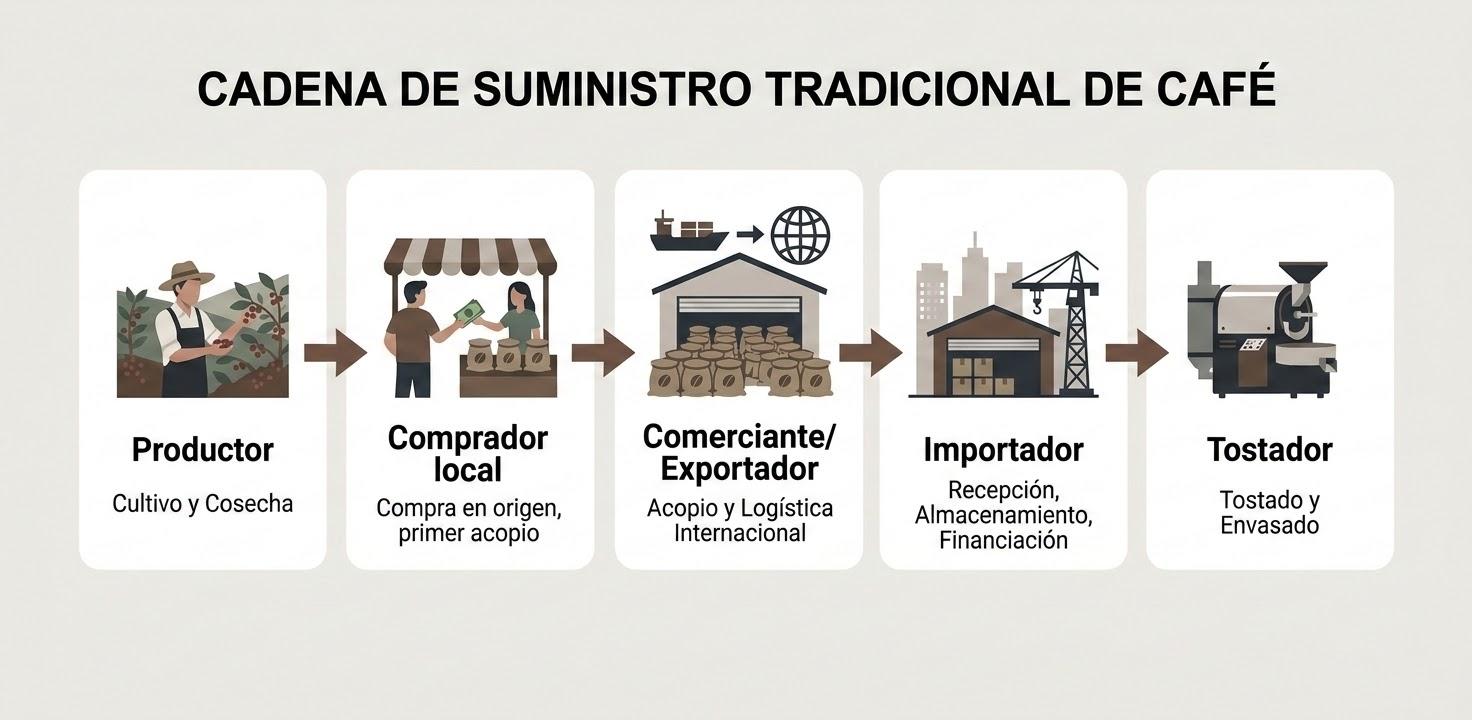
Traditional supply chains
Longer supply chains involve multiple commercial operators, both at origin and destination.
Supply chain: Producer → Local buyer → Trader/Exporter → Importer → Roaster.
Advantage: Broad market reach and shared risk among specialized intermediaries.
Limitation: Reduced traceability and more distant communication, with a potential impact on the perceived quality of each lot.
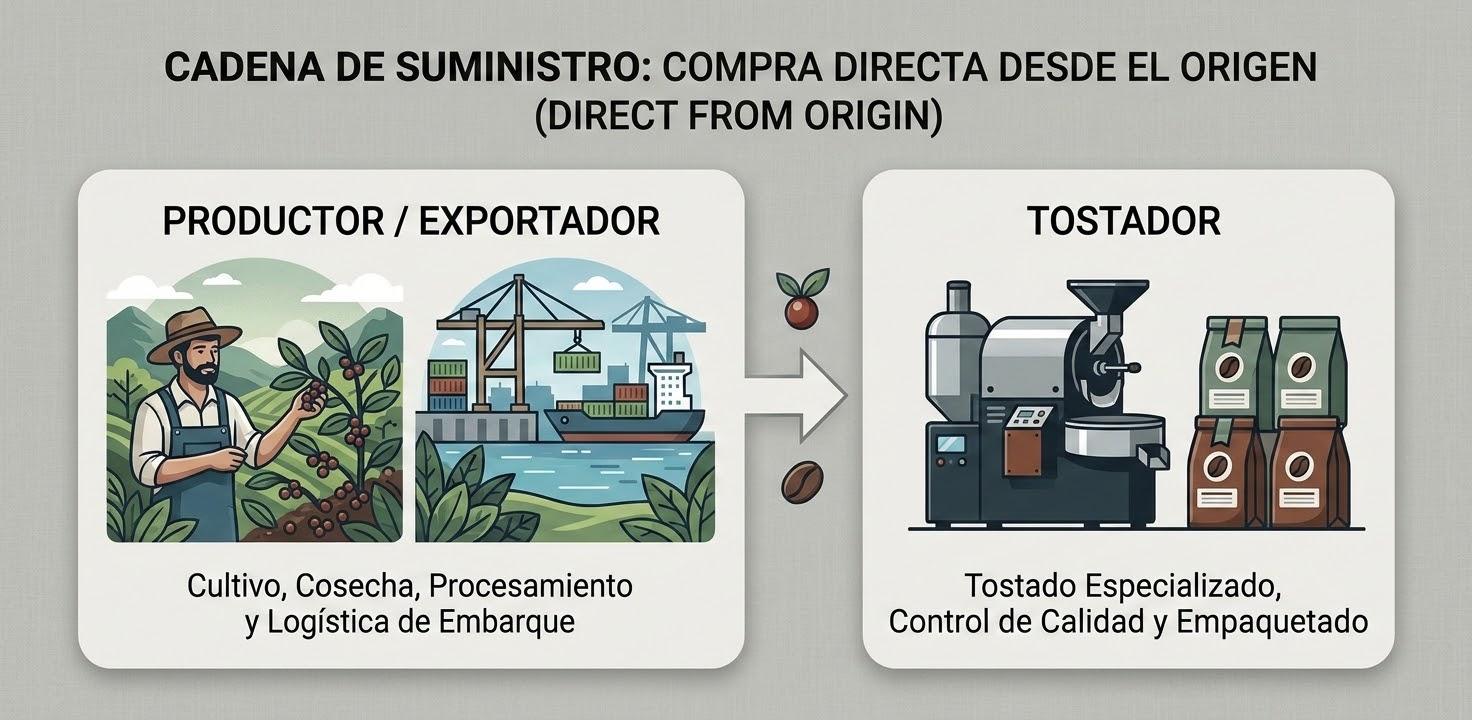
Direct From Origin
This means purchasing coffee in the producing country rather than from a supplier or warehouse in the destination market.
Supply chain: Producer → Exporter → Roaster.
Advantage: Fewer commercial intermediaries and access to green coffee at origin.
Limitation: Buying in the country of origin does not, by itself, guarantee a direct commercial relationship or close communication with the coffee grower.
Direct Trade
Direct Trade emphasizes the commercial relationship between roasters and producers, or their commercial partners at origin. Its focus is on building close, transparent relationships.
Supply chain: Producer ↔ Roaster.
Advantages: Greater traceability, better visibility into quality control, pricing transparency and the possibility of long-term commercial relationships.
Limitation: It may require more time and logistical coordination from the roastery.
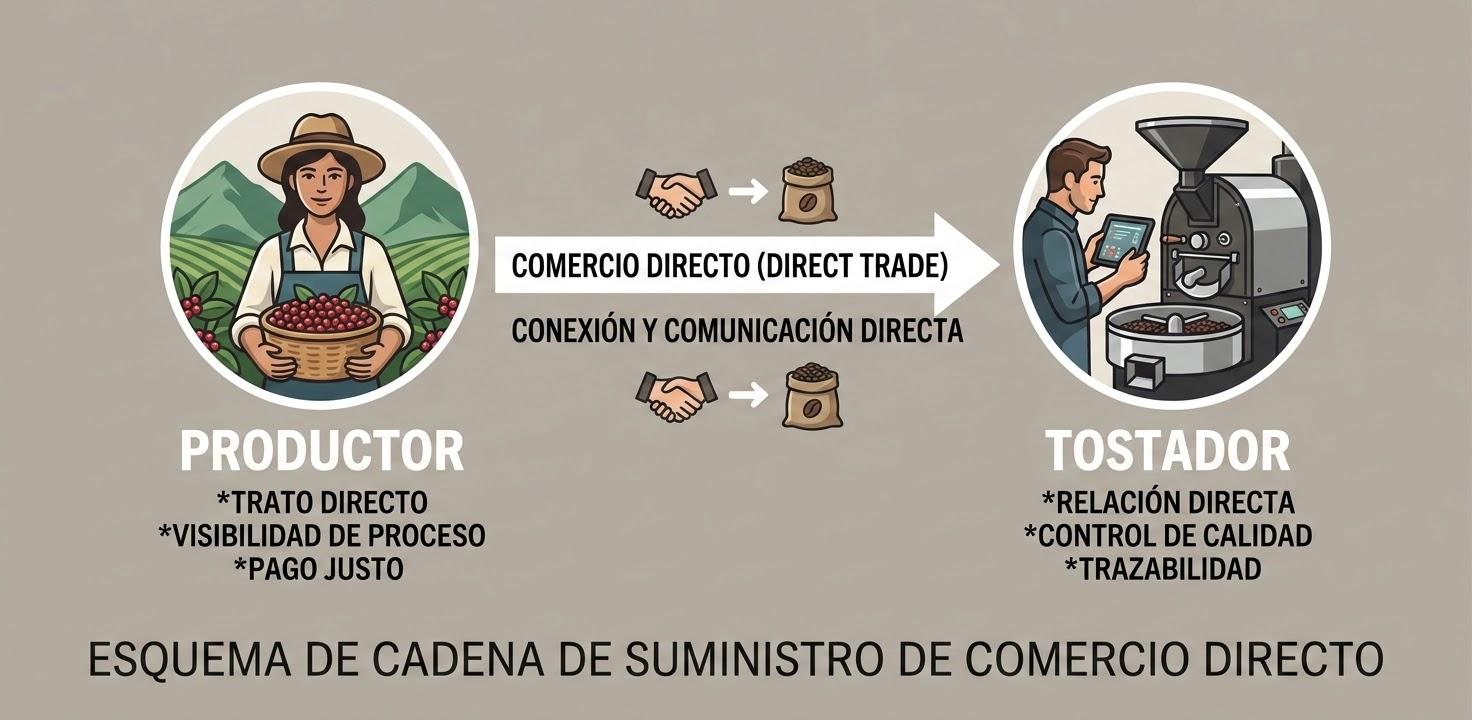
Why consider Direct Trade?
1. Greater traceability
Working more closely with origin can provide better visibility into the coffee's journey. Depending on the producer and sourcing structure, traceability may cover the origin, producer or community lot, processing, milling, preparation, quality control and commercial lot.
Processing dates and methods, milling dates, preparation standards, moisture measurements and lot identification codes help explain what lies behind a shipment of green coffee.
For example, owning a dry mill at origin can strengthen traceability and quality control by allowing milling and preparation to be managed closer to production. It can reduce external bottlenecks and support more efficient export operations. Café de los Cedros plans to have its own dry mill; more information will be shared in a future article.
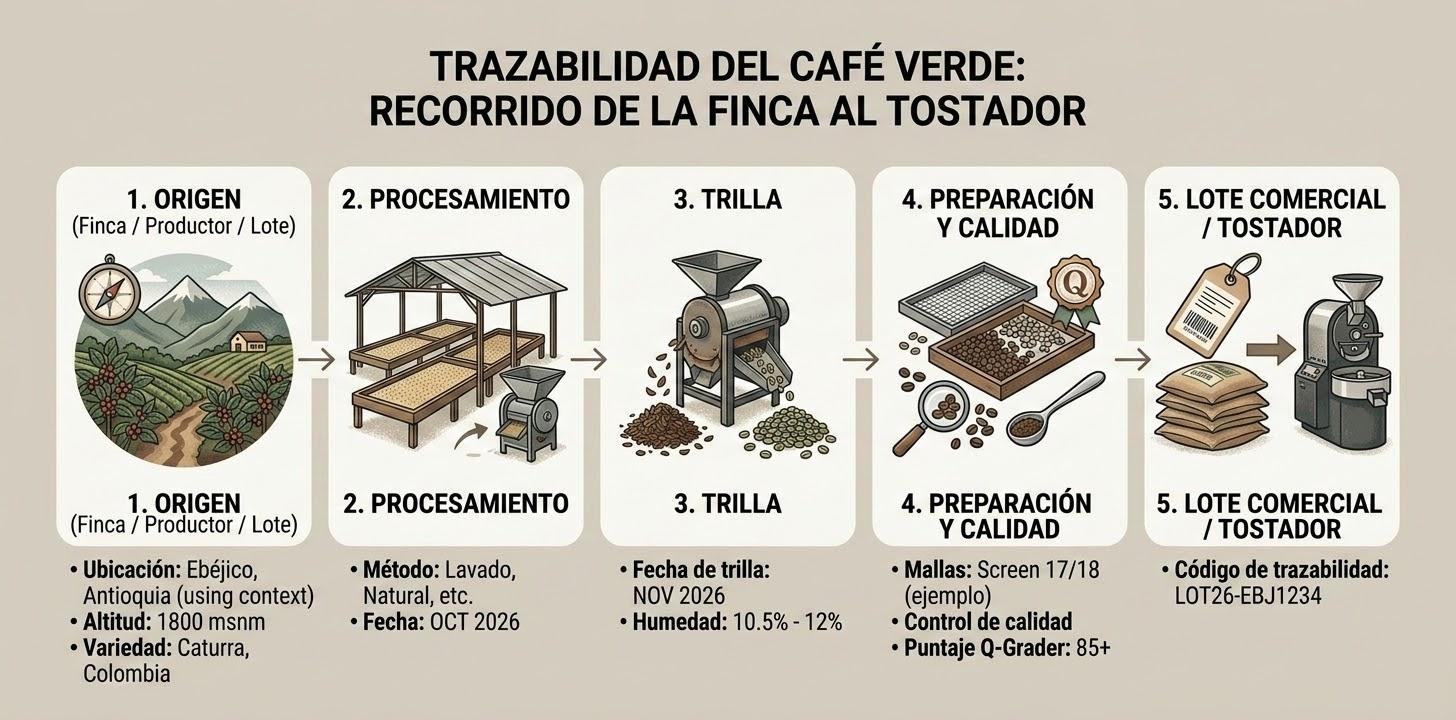
2. Greater quality control
Coffee quality is established long before green beans arrive at a roastery. Cultivation, harvesting, processing, drying, milling and preparation all affect the final cup. A closer relationship with origin can give roasters greater insight into each stage and enable more direct conversations with growers and suppliers.
3. Stronger relationships between producers and roasters
Direct trade can transform the human relationships behind coffee. Instead of communicating mainly through multiple commercial intermediaries, roasters can develop relationships with producers or partners at origin, discussing quality expectations, processing methods, supply availability and long-term needs.
For producers, this can create a clearer connection to the market and a better understanding of what specialty buyers seek. For roasters, it is an opportunity to get to know the people and processes behind the coffee.
Ultimately, direct trade is not simply about shortening a supply chain. It is about building a more direct commercial relationship between producer and roaster.
Does direct trade limit coffee selection?
A common misconception is that buying from producers directly means having access only to traditionally washed coffees or a limited selection of varieties. In fact, direct sourcing can include specialty coffees with complex sensory profiles, differentiated varieties and advanced or experimental processing methods.
The key difference is not necessarily the range of coffees available but the connection roasters can develop with the people who produce them.
Direct trade and emerging origins
Direct trade also offers specialty roasters opportunities to explore origins that receive less attention internationally. Colombia is recognized worldwide for its coffee, but many coffee-growing municipalities and communities remain relatively unknown overseas.
Ebéjico, in western Antioquia, is one example. Working closely with these communities can help roasters discover differentiated coffees and build relationships with the producers and landscapes behind them.
Frequently asked questions about direct coffee trade
What is Coffee Direct Trade?
It is a sourcing model seeking direct commercial relationships between coffee buyers and producers or partners at origin, encouraging greater communication and connection with those growing the coffee.
What is the difference between Direct Trade and Direct From Origin?
Direct From Origin means buying coffee in the producing country rather than from a supplier at destination. Direct Trade goes further by prioritizing the commercial relationship between the roaster and the producer at origin.
Is Direct Trade better than buying through an importer?
Not necessarily. Importers provide important logistics, warehousing, financing and market-access services. Direct Trade is an alternative for roasters that prioritize closer relationships, communication and visibility into origin.
How can green coffee traceability be established?
Traceability can include the origin, producer or community lot, processing date and method, milling date, preparation standard, moisture level and commercial identification codes.
Can I buy Colombian green coffee directly from producers?
Yes. Direct trade enables specialty roasters to build commercial relationships with producers or partners directly at origin.
Does direct purchasing limit coffee varieties?
No. Direct sourcing can include differentiated varieties, complex flavor profiles and advanced processing methods.
Is Direct Trade right for your roastery?
Direct Trade may fit your sourcing strategy if you value lot-level traceability, greater visibility into processing and quality, direct communication with producers, differentiated specialty coffees, emerging origins and long-term relationships.
For producers such as Café de los Cedros in Ebéjico, this approach involves combining cultivation, post-harvest quality control, regional sourcing and export coordination to connect Colombian coffees with international specialty roasters.
For roasters, this can mean access to traceable green coffee, differentiated flavor profiles and closer connections to origin.
If you would like to explore specialty green coffee from Colombia, get in touch to learn about available coffees, sourcing possibilities and building a commercial relationship at origin.
Let’s talk about your coffee’s origin
Ask about available green coffees and sourcing opportunities from Ebéjico, Antioquia.
Contact via WhatsApp ↗